
Invited Speakers
| How AI is Assisting Manufacturing and Testing | |
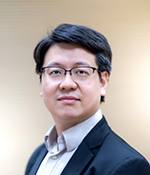 | Jame Tsoi University of Hong Kong Hong Kong, China Presentation Title: Smart Manufacturing in Dentistry |
| Professor James Tsoi is an Assistant Dean (Innovation), Director of Global Hub for Future Dentistry, and Associate Professor of Dental Materials Science at the Faculty of Dentistry, The University of Hong Kong. He received a BSc in Applied and Analytical Chemistry and a PhD in Dental Materials Science, from the University of Hong Kong. He also holds memberships of the Royal Society of Chemistry (MRSC) and the British Computer Society (MBCS), and a Fellow in Advanced HE (FHEA). James is actively engaged in a number of research areas including: dental materials science (mechanical behaviours, surface/bonding and ceramics), smart manufacturing (CAD/CAM and 3D printing), digital dentistry (AI and data science) and dental education (basic science and e-learning). He has authored more than 170 peer-reviewed journal articles, published and granted 10 patents, and been awarded 8 times at international conferences since he joined HKU Dentistry as a faculty member in 2012. He is currently serving on the editorial board of Dental Materials, Immediate Past President of IADR-Dental Materials Group, Member-at-large in the Academy of Dental Materials, and Hong Kong head-of-delegate in ISO/TC 106 (Dentistry). | |
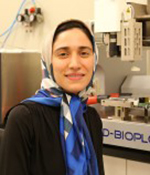 | Lobat Tayebi Old Dominion University Norfolk, VA, USA Presentation Title: The Role of AI in Modern Dentistry: Science, Training, and Practices |
| Lobat Tayebi is the Batten Endowed Professor and Director of the Institute for Engineering in Medicine, Health, & Human Performance (EnMed) in the College of Engineering and Technology at Old Dominion University (ODU). She also holds an adjunct professor position at the Adams School of Dentistry at the University of North Carolina. She joined ODU after a decade of experience at the Marquette University School of Dentistry, where she served as Director of Research. Her research sits at the intersection of biology/dentistry and engineering. She has authored more than 400 peer-reviewed articles (h-index: 80), as well as several patents and books in the field. She is also an author of the new book, Artificial Intelligence in Medicine and Dentistry (Springer, 2026). | |
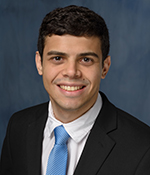 | Mateus Rocha University of Florida Gainesville, FL USA Presentation Title: What is Inside the Black Box? Artificial Intelligence for Dental Materials Scientists |
| Dr. Mateus Garcia Rocha is a Clinical Associate Professor and Director of the Center for Dental Biomaterials at the University of Florida College of Dentistry. He holds a DDS from the Federal University of Rio de Janeiro, a Master's and PhD in Dental Materials from the State University of Campinas, and professional certificates in Computer Sciences from UC Berkeley and Artificial Intelligence from MIT. Dr. Rocha's path to dental materials science is unconventional. Before dental school, he worked as an IT technician managing data infrastructure for dental practices, a background that would later shape his research trajectory. During his dental training, he discovered a passion for dental materials, pursued formal graduate education in the field, and eventually came full circle by earning professional certifications in computer science and artificial intelligence. Today, he bridges these two worlds with the ability to clearly explain how computers and software architectures work at a level that researchers and dentists can understand, critically evaluate, and apply to their own research programs or practice. Dr. Rocha has authored over 60 peer-reviewed publications and multiple book chapters, including the chapter on Artificial Intelligence in Dentistry in the 14th edition of Phillips' Science of Dental Materials. He holds over 10 patents and software copyrights and has contributed to the development of more than 12 software applications in dentistry and dental education. He speaks with equal enthusiasm about debugging computer code and debugging clinical challenges, and today, he'll open the black box and show us what's really happening inside AI systems for dental materials research. | |
| Ceramics and Polycrystalline Materials | |
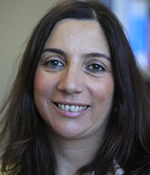 | Susana Olhero University of Aveiro Aveiro, Portugal Presentation Title: Additive Manufacturing of Dental Ceramics: Opportunities and Limitations |
| Susana Olhero is an Assistant Professor in the Department of Materials and Ceramic Engineering at the University of Aveiro and a researcher at CICECO – Aveiro Institute of Materials. Her research focuses on the processing of ceramic-based materials for biomedical applications, with a particular emphasis on dental materials. She has extensive expertise in the development of multifunctional bioceramics using additive manufacturing, with a focus on tailoring feedstock properties and printing parameters to achieve application-specific performance. | |
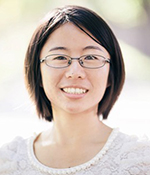 | Fei Zhang KU Leuven Leuven, Belgium Presentation Title:3D Printing of Dental Ceramics: Challenges and Opportunities for Zirconia and Lithium Disilicate Glass-Ceramics |
| Dr. Zhang is an Assistant Professor at KU Leuven (Belgium) with a joint appointment (50/50) between the Department of Oral Health Sciences (BIOMAT) and the Department of Materials Engineering (MTM). She is a researcher with over 10 years of experience in bioceramics, focusing on translating fundamental materials science principles into ceramics with improved clinical potential for dental applications. Her work is recognized in the fields of biomaterials and advanced ceramic mechanics, with particular emphasis on the mechanical behavior, deformation mechanisms, and reliability of zirconia-based biomaterials. Her group explores how microstructure, interfaces, and processing routes, including additive manufacturing, govern strength, fatigue, aging, and long-term biomechanical performance under physiological loading. Through close collaboration with clinical research groups, she also investigates the links between mechanical performance and biological response in load-bearing and implantable systems. She has authored over 60 peer-reviewed publications, with more than 4,500 citations (h-index 34). | |
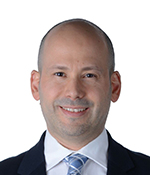 | Estevam Bonfante University of São Paulo São Paulo, Brazil Presentation Title: Advances in Zirconia Recycling and Perspectives for Future Applications |
| Full-time Associate Professor at the Department of Prosthodontics and Periodontology based at the University of São Paulo in Bauru School of Dentistry, Brazil | |
| Polymers and Tissues | |
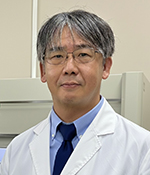 | Koichi Nakayama Saga University Saga, Japan Presentation Title:Scaffold-free Bio-3D Printing for Solid Organ Fabrication |
| Dr. Koichi Nakayama is a Professor and Director of the Center for Regenerative Medicine and Biomedical Engineering at Saga University's Faculty of Medicine. An orthopedic surgeon by training, he is internationally recognized for inventing the Kenzan method—a scaffold-free bioprinting technique that uses microneedle arrays to assemble cellular spheroids into three-dimensional tissues—which provided the foundation for the world's first scaffold-free bio 3D printer. Through the integration of clinical expertise and pioneering research, Dr. Nakayama leads efforts to advance engineered tissue development and the future of regenerative therapies. | |
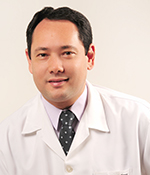 | Marcelo Giannini University of Campinas Campinas, Brazil Presentation Title: Evaluation of 3D Printing Polymers for Dental Applications |
| Marcelo's current professional position is part-time Full Professor at Piracicaba Dental School, University of Campinas (FOP-UNICAMP, Piracicaba, SP, Brazil). His DDS degree was obtained in 1992, Master in 1997, and Ph.D. in 1999 in Clinical Dentistry. He coordinated the Graduate Program of Dental Materials during 2010-2014 and was the Chairman of the Department of Restorative Dentistry, 2009-2010 at the same school. Marcelo has authored/co-authored 369 original research papers since 2000, published 1 book and 15 book chapters, has 5 patent deposits on materials science and has been the recipient of several awards and honors, such as the IADR DMG Science - Peyton-Skinner Award for Innovation in Dental Materials. He has advised 33 master and 25 Ph.D. students and is the recipient of several important grants from Brazilian Governmental Agencies. He serves as referees for several high-impact journals in dentistry and material sciences. Marcelo has maintained a private dental practice 20 hours per week, besides intensive continuing education work. He also has served in the capacity of President of the International Academy for Adhesive Dentistry (2019-2021), Secretary/Treasurer of the Dental Materials Group-IADR (2019-2022), Member-at-Large of the ADM (2020-2024) and Vice-President of the Brazilian Group of Dental Materials (2024-2026). | |
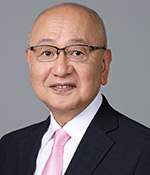 | Junji Tagami TMDU, Emeritus, Japan Presentation Title:Does 3D Printing Improve Direct Composite Restorations? |
| Doctor Junji Tagami, Prof. Emeritus at Tokyo Medical and Dental University(TMDU), achieving his DDS in 1980 and his PhD in 1984. He was appointed to the Professor and Chair of Cariology and Operative Dentistry, Graduate School at TMDU from 1995 to 2021. He continues clinical, academic and educational activities as the director of Aoyama Quartz Dental Clinic and Chulalongkorn University and University of Indonesia as the Visiting Professor. He is a prolific author who has contributed more than 500 papers to per-reviewed international journals and some 200 papers to Japanese academic journals in the fields of cariology, tooth-colored dental restorative systems, the bonding of materials to dental tissues. He was awarded Honorary Degrees from King's College of London and Mahidol University in Thailand, the distinguished scientist award, Wilmer Souder Award, from IADR, and The President’s Award of Japanese Association of Dental Science. | |
